
My column today in the Pittsburgh Post-Gazette.
Special to the Post-Gazette
Mar 23, 2026
4:30 AM
Pennsylvania senator John Fetterman was right to break with his fellow Democrats and vote against a potential funding cut-off for the current war against Iran. Congress should generally support a President who feels military action is necessary to protect the security of the United States.
It was shameful when Republicans embarrassed Presidents Bill Clinton and Barack Obama over proposed military actions. It was no better when Democrats tried to do the same thing to President Donald Trump.
But Fetterman was wrong in the reason for his vote.
Fetterman’s mistake
He supports this war. But the war was a mistake: expensive, disruptive and harmful, like all wars, but, unforgivably, unnecessary and, under the terms Trump has set to fight it, unwinnable.
The loss of life, and the economic suffering we are all enduring because of this war, were avoidable. In 2015, Obama and our allies negotiated an agreement with Iran that eliminated economic sanctions in return for Iran’s renunciation of its nuclear weapons program, specifically ending uranium enrichment. The agreement was to be enforced through an inspection program.
In 2018, Trump cancelled U.S. participation in the agreement and reimposed sanctions against Iran. At that point, Iran considered itself no longer bound by the agreement, which soon disintegrated.
By all accounts, despite some cheating, Iran was complying with the main points of the agreement. The Trump Administration did not premise its decision to abandon the agreement on Iranian non-compliance. Instead, Trump argued that the agreement was a bad deal and that he would obtain a better one.
Critics like Israeli Prime Minister Benjamin Netanyahu had opposed the agreement because, as they correctly pointed out, it strengthened the Iranian regime, while doing nothing about Iran’s ballistic missiles, its support of violent proxies like Hamas and Hezbollah, and its regional ambitions. Critics also pointed out that while Iran pledged never to produce nuclear weapons, some inspections would lapse after 10 to 15 years.
These objections were unrealistic. America’s fundamental interest in the Middle East is preventing the destruction of Israel, a key U.S. ally. Iranian missiles and proxies are not an existential threat to Israel. The existential threat is an Iranian nuclear weapon.
The agreement prevented that. You don’t get everything you want in an agreement with an adversary.
If you doubt the Iranian agreement was a good deal, just ask yourself what would have happened if, after the U.S. bombing of Iranian nuclear facilities in June, Iran had publicly offered to give up uranium enrichment, destroy its stockpile and accept unannounced inspections in return for an end to sanctions.
But promised nothing else. Trump would have taken that deal in an instant, declared himself a military genius and we would not be at war today. Well, we had that deal.
Trump made a terrible mistake in 2018.
Trump’s worse mistake
But the mistake he is making today in continuing the war is even worse. Trump’s goal is not just to temporarily degrade Iran’s military capacity to threaten its neighbors.
He wants regime change, either in the sense of an overthrow of the current Iranian leadership or at least a tamed Iran, with more compliant and realistic leadership. Despite Trump’s ludicrous invocation of “unconditional surrender,” bombing alone is sure to fail without the realistic threat of a full-scale U.S. invasion.
Even after atomic bombs were dropped, Japan did not surrender until the Soviet Union invaded Manchuria and the U.S. threatened invasion. (And even then, the surrender was not unconditional, since the Emperor was retained).
Iran is not going to surrender, nor is its regime going to change its ways. China and Russia will see to Iran’s resupply in short order after the war ends.
Trump apparently hoped that if the Iranian regime were sufficiently weakened, its people would rise up and overthrow the government. The whole world, including the people of Iran, would greatly benefit if that were to happen. And it could happen.
But the bombing is irrelevant. Short of invasion, the U.S. cannot disarm the internal Iranian military. A popular uprising would lead to brutal fighting, with the outcome very uncertain.
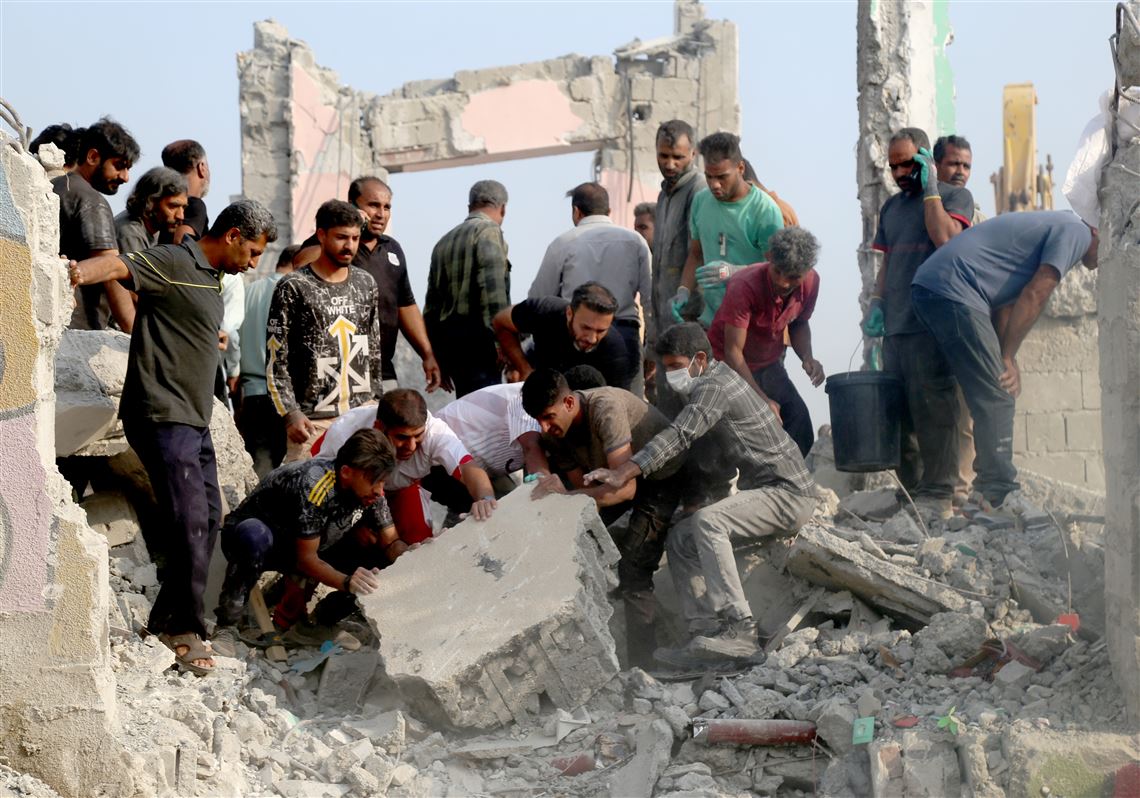
Nor is bombing likely to win the friendship of the Iranian people. The U.S. missile strike that killed over 100 Iranian children is not likely ever to be forgotten in Iran.
The inevitable result of abandoning the Iranian agreement was the endless war that we have been fighting with Iran since 2018. The current war is just another stage in that endless war. And the next war with Iran will just be the next stage of that endless war.
When Iran wins
That is actually acceptable to Israel and other hard-line observers. They feel that until the current regime is eliminated, a permanent state of unofficial war that constantly degrades Iranian capabilities is a small price to pay to prevent Iran from obtaining nuclear weapons or increasing its influence in the region.
What these critics forget is that the American people are already tired of endless wars. Eventually we will elect a president who refuses to fight. At that point, Iran wins. And it finally obtains its bomb. Peace was always the only realistic choice.
Bruce Ledewitz, a contributing writer for the Post-Gazette’s editorial page, is professor of law emeritus at the Thomas R. Kline School of Law of Duquesne University. He writes every other Monday. The views expressed do not represent those of Duquesne University. His previous article was “Republicans, give Trump authority to pass tariffs.”
First Published: March 23, 2026, 4:30 a.m.



0 Comments