
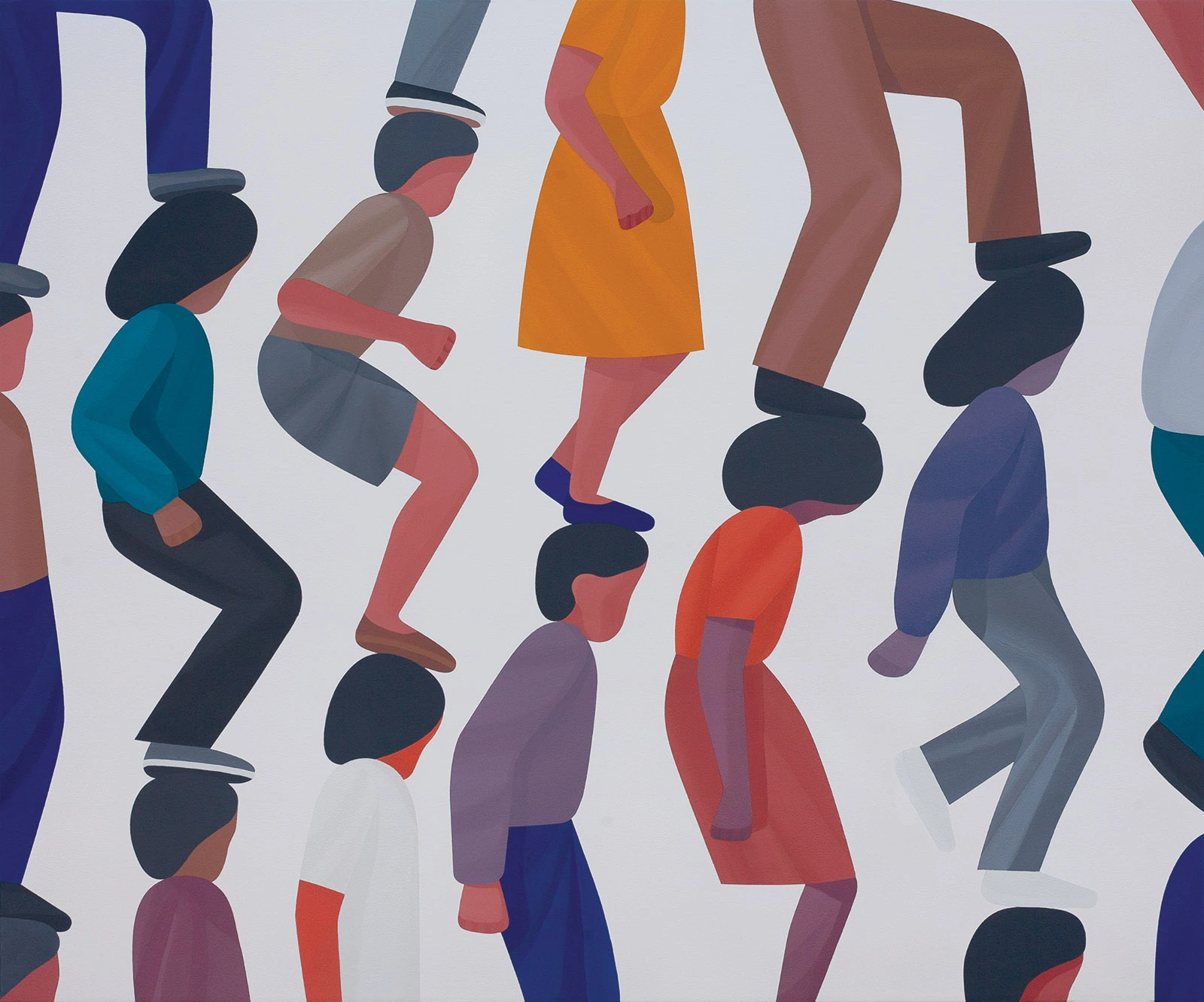
In the December 16, 2021 issue of The New York Review, Sigrid Nunez reviews Virtue, a novel by Hermione Hoby.
Not to give anything away, but the novel follows a feckless young man who makes a bad choice that wrecks his life forever. Never again is there a possibility of moral agency and a genuine human existence.
It is 2028 and Luca is looking back at the moment of his choice, in 2017. Then he imagines looking back from a greater distance, at the end of his life:
“At one point Luca looks far beyond 2028 to imagine himself in his final hours, in a hospital bed, remembering a particular moment from the summer of 2017:
‘not knowing then that soon a middling marriage would go by in an instant, two boys would be born and leave home before you knew it, before you knew them, and that you’d teach at the same Philadelphia high school for what felt like forever in its drudgery and like an instant in terms of what was gained.’”
Except that it wasn’t all that terrible a choice. And it isn’t clear why it should have precluded moral regeneration.
Later in the review, Nunez, an accomplished writer in her own right, shows some impatience with the whole premise:
“If a person repents sincerely, as Luca does, shouldn’t there be a possibility for atonement? Or is giving up all his youthful hopes and dreams meant to be that atonement? If he hates himself for not having taken the higher road back then, why can’t he learn from the past and seek that road later? One of the privileges of living in a privileged society is the freedom to do the right thing. “I wanted to do something good,” he tells us, and to that end he commits himself to a graduate teaching program that will lead to employment in an underserved high school. But we know how that turns out: not so much a chance for redemption as an enduring punishment.”
It’s clear what Nunez is talking about—what the Jewish tradition calls Teshuvah, repentance. What the Christian tradition calls confession. And other religious traditions have their own terms and understandings.
But all religious traditions take the human condition seriously, which means we all sin. Badly. All the time. And all of them hold out the promise of some form of starting over. And much great literature is grounded in this possibility. Without it, there is a certain flatness.
I cannot see that either Hoby or Nunez has much in the way of religious grounding. But Hoby is younger—born in 1985. Nunez is 70. My age. You can’t really be 70 today without a feel for religion. But you can lack that feel if you’re in your 30’s.
Nunez wants Virtue to be a great novel. It is only a good one. And part of the reason for that is the decline of religion. Not the decline of belief. But the decline of the insights into the human condition that religion brings.




0 Comments