
My column today, Oct. 26, 2026, at OnlySky.
I think of myself as a pro-religion secularist. Although I’m a nonbeliever, I strongly support the rights of people to their religious expressions without government interference.
But even I must admit that America’s pro-religion lobby and the conservative majority on the U.S. Supreme Court are on an illogical, ideological and unsustainable trajectory regarding religious liberty under the Constitution. Without any explanation of where we are headed, the pro-religion attitude prevailing on the court seems to be to grant special rights to believers in every case, and worry later about how far it might go or what the consequences may be.
A day of rest at the rest stop
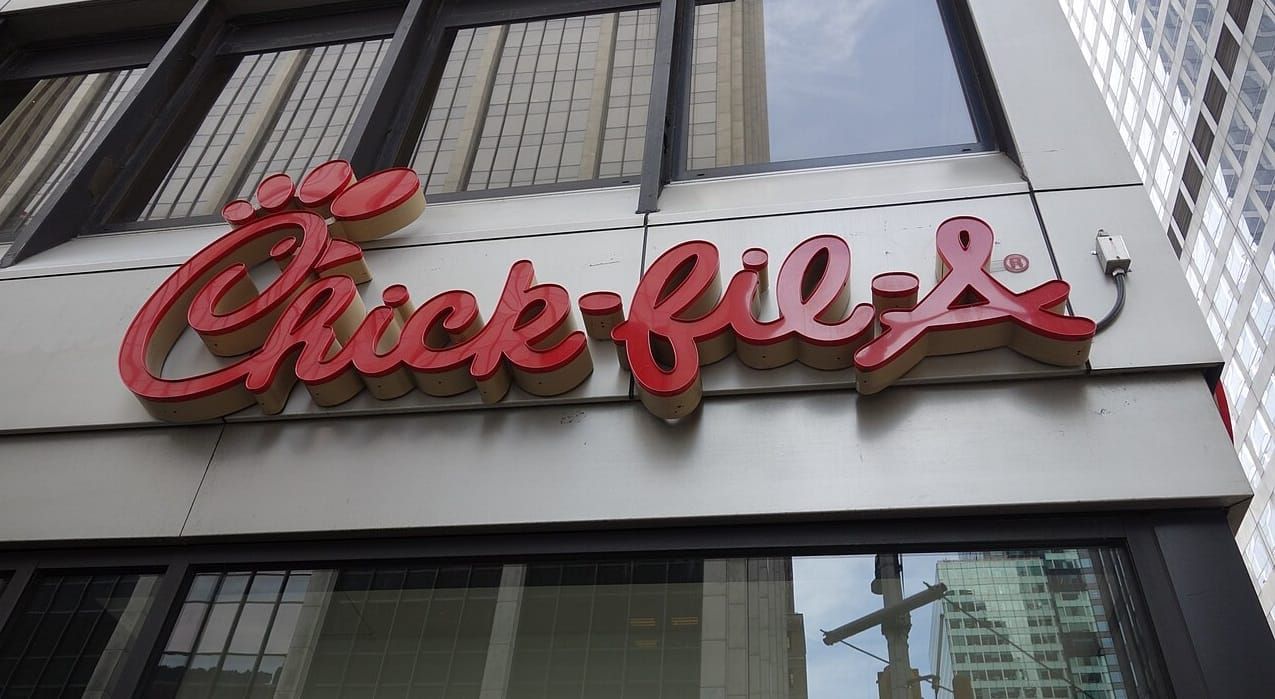
This became clear to me when I recently encountered Chick-fil-A restaurants at service stations along the New York State Thruway. A few years ago, I gave my students an exam question in which Chick-fil-A tried to bid on a highway service station contract that required vendors to be open seven days a week. Chick-fil-A’s founder was a devout Christian and decreed that the company would close for business on Sundays, a policy they continue to this day.
In the exam question, the restaurant chain’s bid is rejected because of the six-day opening policy, on the grounds that the restaurant’s bid does not comply with the parameters of the government contract. Chick-fil-A then sues the state for violating their right to free exercise of religion under the Constitution. My question asked, what result would be legally correct?
The obvious answer to the question—or at least I thought so at the time—was that the restaurant should lose its case. That result seemed inevitable for two reasons. First, if it were allowed to bid, Chick-fil-A would have an unfair advantage in only having to be open six days. So, of course, its bid would be lower than that for restaurants that would have to be open and pay staff seven days a week. Second, Chick-fil-A literally could not fulfill the government contract, which is to provide highway services seven days a week. Imagine if a gasoline company submitted a similar six-day bid because of religion. That would present a serious safety issue for a traveler who was almost out of gas. Or what if there were two days a week a restaurant wanted to close for religious reasons? Where does it end?
I did not give the matter another thought until I was traveling in October this year in New York State. There was a Chick-fil-A restaurant at every service station with signs explaining that the restaurant was not open on Sundays. At most service stations, there was another restaurant, but at one there was only a Starbucks coffee shop. Had my exam question come to life and had Chick-fil-A won its lawsuit?
The story of how this came to pass is legally murky. Apparently, the service station contract was filled by a private contractor for New York State. The state had not required that each restaurant be open seven days a week. There was one media report that the state is reconsidering the terms of the contract.
Catholic schools demand the right to discriminate
The highway example is important because of an actual case that will be decided this term in the Supreme Court. In St. Mary’s Catholic Parish v. Roy, two Catholic schools are suing to be included in Colorado’s universal pre-K program. The schools qualify in every way except for their refusal to adopt the state requirement of non-discrimination in admission for families based on sexual orientation or gender identity. The schools will not admit the children of gay parents, whether they are married or not. Doing so, the schools argue, would interfere with religious teaching that families can only consist of a biological mother and father.
The weird hypocrisy of the schools’ position is not relevant here. The schools do not categorically exclude the children of straight parents who are not married—though the schools claim that they reserve the right to evaluate every family for its alignment with Catholic teaching. They certainly admit children of non-Catholic families. And they don’t investigate the children of contraception users, domestic abusers, adulterers, divorcees, or any of us other sinners. Only the children of gay parents, whether married or not, are absolutely excluded. I am sure some gay families exemplify Catholic values better than most of us. But the law must take all sincere religious claims as genuine, whether they are consistent or not.
There is no doubt whatsoever how this case will come out in the Supreme Court. The schools will win. In fact, I am considering supplementing my retirement income by placing a bet on this outcome on some prediction market website. But does this mean that Chick-fil-A would now similarly win the case in my exam question?
I think the answer is still no; in fact, I still think the answer has to be no for the reasons adverted to earlier. What if Catholic schools opposed teaching early reading for religious reasons? Or, to take it a step further, what if a “school” argued for religious reasons that kindergarten is too early for any schooling at all? I am sure Colorado could exclude that school. At least, I hope so.
Fighting the trend of secularism
The problem is that when it comes to religion and especially religious discrimination cases, the conservative majority on the Court does not explain itself. The only standard at work seems to be that the religious party always wins. The Court is likely to rule in the pending case that excluding the schools is simple religious discrimination and leave it at that.
That is what happened in an earlier parental rights case, Mahmoud v. Taylor, decided in 2025. The conservative majority allowed parents to opt out their children from elementary school lessons featuring LGBTQ+ inclusive storybooks for religious reasons, without deciding whether parents could similarly opt out their children from high school biology and geology classes that are inconsistent with the creation story in the Book of Genesis. Again, surely the answer must be no—biology and geology are different—but why?
Reading between the lines, I believe that at least some of the justices view state anti-discrimination laws and gender-inclusive policies as progressive window dressing, not necessary to the state’s underlying interests in the services being provided. In contrast, biology and geology go to the heart of the curriculum, as would instruction in early reading. These things the state may insist on, regardless of parents’ religious objections. But, for whatever reason, the justices are reluctant to come out and say this.
If I am right, the Court’s attitude toward Chick-fil-A’s highway claim would not be as sympathetic as it has been in past religion claims. And a similar gas station religious claim would be rejected.
But because the Court has not given us any parameters, we are living in a legal context in which all religious claims seem destined to win. That trend obviously cannot continue indefinitely. But I don’t know how long it will go on—or how much damage it will do in the meantime.
Supporters of religion are currently in control of the U.S. Supreme Court. Thus, they are the only ones who can set forth limits on special rights for the religious. I only hope we don’t have to wait too long for that to happen.
Barack Obama told America that in the midst of change, ordinary people cling to guns and religion. Change has only accelerated since then. American society is becoming more secular and less grounded in tradition. Fewer than half of Americans belong to any church, and tens of millions are now nonreligious nones, outnumbering every single religious denomination. This wave of change is still cresting, as according to new research, as many as 1 in 3 American adults doubt their religion.
The ascendance of Donald Trump is a symbol of resistance to those changes. The current Court has been alarmed by this secularizing trend and has been doing its best to carve out a protected space for guns and God.
Many progressive Americans view these decisions as a threat—a reactionary Court trying to pull America in a backward direction. But for others, these protections of guns and religion, along with hostility to immigration and new kinds of rights, represent a quite small refuge from vast, threatening forces overtaking the culture. In any event, this has been the work of the Roberts Court.
HEATHENS, a new film from OnlySky’s publisher, tells the stories of America’s growing secular population. Learn more or find a screening near you.


0 Comments