
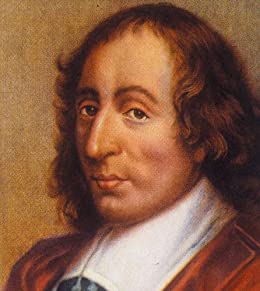
Pascal’s wager—the 17th century mathematician and theologian—is aptly described in Wikipedia as follows: Pascal argues that a rational person should live as though God exists and seek to believe in God. If God does not exist, such a person will have only a finite loss (some pleasures, luxury, etc.), whereas if God does exist, he stands to receive infinite gains (as represented by eternity in Heaven) and avoid infinite losses (an eternity in Hell).
Actually, many secular people accept Pascal’s argument implicitly. This is represented by the Good-Without-God idea. We can live as though God exists without believing in Him.
But recently I have been coming upon arguments that heaven or some equivalent afterlife exists. There is a movie about a boy who experiences heaven in a near-death context, a Detective Murdock episode and a kind of documentary making the rounds.
All of these accounts suffer from the flaw that people who experienced bliss and beauty in these situations ultimately did not die. So, they don’t mean much to me.
I assume that consciousness is what the brain does and so no brain, no me. Death is extinction.
But I would like here to reverse Pascal’s wager. There accounts of blissful continuation have absolutely no ethical freight. They tell me nothing about how I should live. So, it seems to me the rational thing to do is to try to live in a way that reconciles me to a life that ends in extinction. That way, if it turns out that way, I have lived truthfully. And if it turns out that there is a heaven, etc., that is just a cherry on top.




0 Comments